
Training Programs
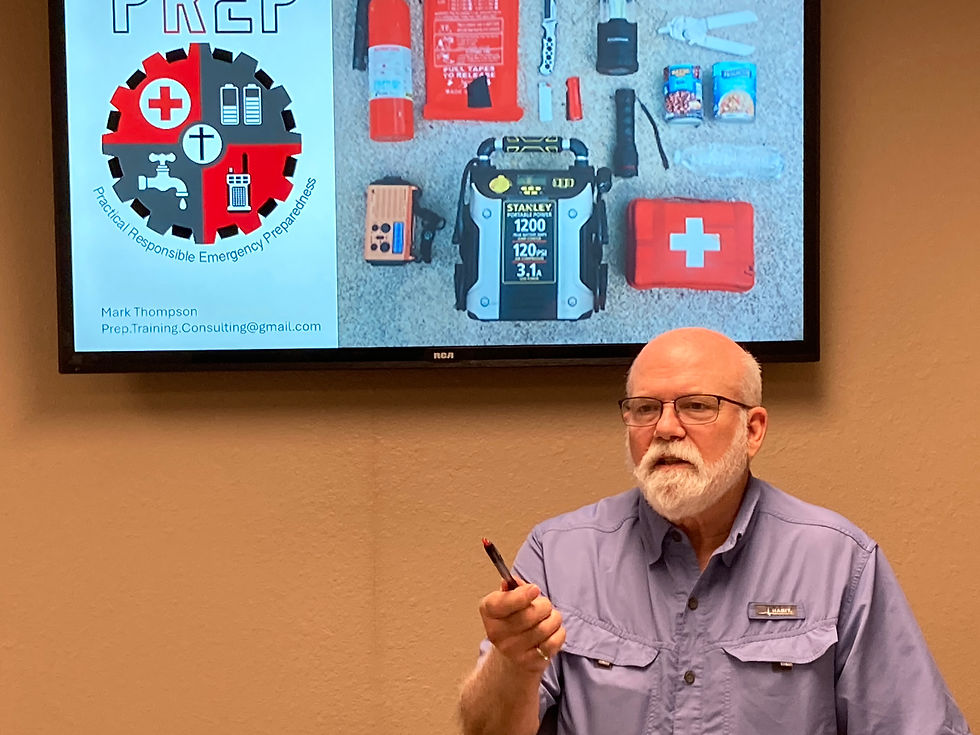
All of our programs are designed to provide practical real-world applications of effective preparedness practices. Each training is led by an experienced subject-matter practitioner in a relaxed setting, with class sizes adjusted to support a strong learning environment.
1
Courses
PREP Training has developed a series of instructional courses designed to introduce individuals and families to preparing for natural disasters and emergencies most common to East Texas. Designed as a tiered program, each course builds upon the foundation of the previous session to strengthen participants’ knowledge and readiness. Through this structured approach, PREP Training has supported local church communities in developing effective emergency preparedness skills.
2
Seminars
Since the introduction of the initial basic PREP 101 course, demand has grown for more advanced instruction focused on specific areas introduced in the foundational training. In response, a series of targeted 2–3 hour seminars has been developed, each designed to provide intensive coverage of single-topic subjects within at least seven key preparation categories.
Currently, these categories include Long-Term Sustainability, featuring a dozen distinct areas of specialized instruction; Communications, featuring three different topical seminars; First Aid and Health, encompassing five topic-focused sessions; and Personal Defense, which offers six firearms-related seminars, most incorporating a hands-on workshop component.
3
Workshops
Several seminars have been further developed into interactive Workshops, which maintain the educational depth of the traditional seminar format while adding a purposeful hands-on component. These workshops are intentionally designed for smaller groups, enabling stronger engagement and more personalized instruction.
Examples include the Water Filtration Workshop, where participants construct a functional DIY filtration system using readily available materials, and the Canning Workshop, which offers a full kitchen-based experience in food preservation. Many Personal Defense sessions also operate as workshops, as each participant receives individualized live-fire range training within small groups limited to six participants per session. The organization continues to expand its workshop offerings to provide more opportunities for practical, experience-based learning through these immersive, practicum-style sessions.